
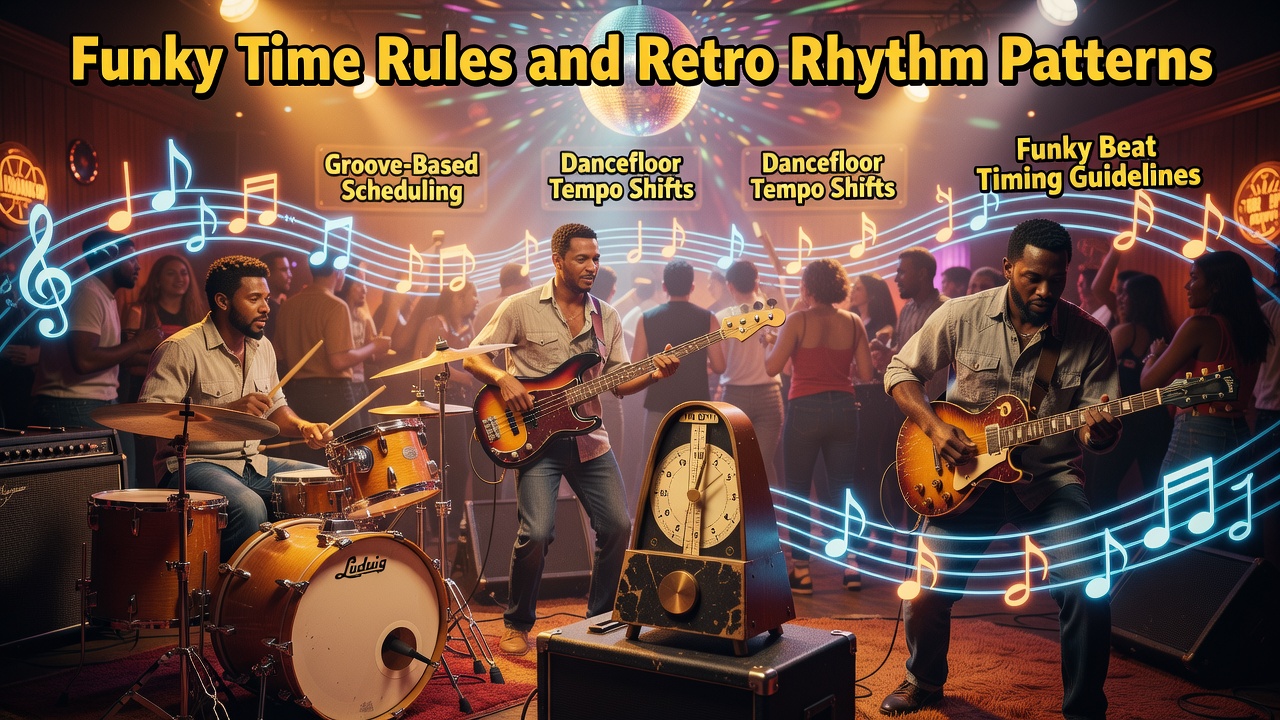
A metronome set to 110 beats per minute sounds nothing like a groove until someone shifts the emphasis off the downbeat. That single decision - where the accent lands - separates a stiff loop from a track that makes a room move. Funk built its entire identity on this kind of displacement, and understanding how it works reveals why certain rhythms age well while others fade into background noise.
Musicians, event organizers, and even software developers building rhythm-based games have spent decades trying to codify what makes funk feel alive. The answer lies partly in funky time rules - the informal but consistent conventions that govern syncopation, rest placement, and accent weight in groove-driven music. Some of these principles have even made their way into unexpected places, including timing mechanics referenced in funky time rules used within certain interactive entertainment platforms, where rhythm becomes a structural element rather than just a stylistic choice. Whether applied to a live band or a scheduled event, these rules shape how audiences experience time itself.
This piece breaks down those rules methodically: how retro rhythm patterns evolved, how groove-based scheduling can organize anything from a DJ set to a rehearsal calendar, and how dancefloor tempo shifts keep audiences engaged rather than fatigued. The goal is practical clarity, not nostalgia for its own sake.
The Origins and Logic of Funky Time Rules
Funk did not emerge from abstract theory. It came from bandleaders demanding tighter interplay between bass, drums, and guitar, all locked into a single rhythmic pocket. The "rules" that resulted were never written down as formal notation - they were transmitted through rehearsal, correction, and repetition.
Why Syncopation Became the Genre's Backbone
Syncopation shifts emphasis away from the expected beat. In funk, this means accenting the "and" of a beat rather than the beat itself, creating tension that resolves only when the next accent lands correctly. This tension is what listeners physically respond to - it's why funk basslines feel like they're pulling the body forward rather than simply marking time.
The Role of Silence and Rest
Funk musicians often say the rest is as important as the note. A held-back hi-hat or a dropped beat creates anticipation. Removing sound at the right moment amplifies the impact of the sound that follows, which is a core tenet of funky beat timing guidelines used by arrangers and producers alike.
Consistency as a Structural Requirement
Unlike genres that reward improvisation over structure, funk requires disciplined repetition. A bassline that drifts even slightly off its established pocket disrupts the entire groove. This is why funk rhythm sections rehearse patterns exhaustively before layering melody or vocals on top.
Understanding Retro Rhythm Patterns
The rhythmic vocabulary of the 1970s did not disappear - it became a reference library. Contemporary producers still pull directly from these patterns because they solved a specific problem: how to make repetitive rhythm feel dynamic rather than monotonous.
Classic Patterns That Still Define the Genre
Certain drum patterns recur across decades of funk and funk-adjacent music. The "one-drop" emphasis, the syncopated snare hit on the upbeat, and the interlocking hi-hat pattern all originated in specific recordings but became genre-wide conventions.
- The syncopated snare accent that lands slightly ahead of or behind the expected beat
- Interlocking rhythm guitar "chicken scratch" patterns that fill rhythmic gaps
- Bass patterns built around octave jumps and rests rather than continuous notes
- Horn stabs placed to punctuate rather than dominate the groove
Why These Patterns Translate Across Decades
Retro rhythm patterns survive because they're built on physiological response rather than trend. The human body responds to syncopated rhythm at a near-universal level, which is why these patterns resurface in hip-hop sampling, disco revival tracks, and modern dance production without losing their effectiveness.
Adapting Old Patterns to New Production Tools
Digital audio workstations now allow producers to quantize rhythm precisely, but the best funk-inspired tracks intentionally introduce slight timing imperfections. This "humanizing" process recreates the feel of a live rhythm section, even when every element is programmed.
Groove-Based Scheduling: Applying Rhythm to Planning
Rhythm isn't confined to music. Event organizers and performance directors increasingly borrow rhythmic logic to structure schedules - a practice best described as groove-based scheduling.
What Groove-Based Scheduling Actually Means
Instead of dividing an event into rigid, equal time blocks, groove-based scheduling treats time the way a drummer treats a bar: with intentional variation. A set built this way might compress high-energy segments and stretch out slower transitions, mimicking how a well-arranged funk track breathes.
Applying This to Live Music Events
A DJ or live band using groove-based scheduling maps out tempo changes ahead of time, anticipating audience fatigue points and building in recovery moments. This isn't guesswork - it follows the same rest-and-accent logic found in funky time rules.
Beyond Music: Rehearsals and Production Timelines
Recording studios often schedule sessions using similar principles, front-loading complex arrangements when musicians are fresh and reserving simpler tasks for later in the day. The rhythm of the schedule itself becomes a productivity tool.
Dancefloor Tempo Shifts and Audience Engagement
A set that never changes speed loses its audience within twenty minutes. Dancefloor tempo shifts exist specifically to prevent that decline, using calculated tempo increases and decreases to sustain energy over hours rather than minutes.
The Physiology Behind Tempo Changes
Sustained physical movement at a single tempo causes muscular fatigue and mental habituation - the brain stops registering the rhythm as novel. Introducing tempo shifts every few tracks resets audience attention and physical energy.
Common Tempo Shift Techniques
- Gradual acceleration across three or four tracks to build toward a peak moment
- Sudden tempo drops to create contrast after a high-energy sequence
- Half-time breakdowns that maintain groove while reducing perceived speed
- Layered tempo changes where percussion shifts before melodic elements catch up
Reading the Room Before Shifting Tempo
Experienced DJs adjust these shifts based on real-time crowd response rather than a fixed plan. A tempo increase that works for one audience might empty a dancefloor in front of another, which is why flexibility remains more valuable than rigid adherence to a pre-built set.
Funky Beat Timing Guidelines for Practitioners
For musicians and producers who want to apply these principles directly, a handful of practical guidelines consistently produce results.
Establishing the Pocket Before Adding Complexity
Every funk arrangement starts with bass and drums locking into a shared rhythmic pocket. Only after that foundation is solid should guitar, horns, or vocals be layered on top. Skipping this step produces arrangements that sound cluttered rather than groovy.
Using Accent Placement to Signal Transitions
A well-placed accent - a snare hit, a horn stab, a bass slap - can signal an upcoming section change without disrupting the groove. This technique appears constantly in both classic and contemporary funk arrangements.
Balancing Repetition With Variation
Repetition builds the groove; variation keeps it interesting. The most effective funk arrangements repeat a core pattern for several bars before introducing a subtle variation, then return to the original pattern before the listener notices fatigue.
Frequently Asked Questions
What makes a rhythm "funky" rather than just danceable?
Funkiness comes from syncopation combined with intentional rhythmic space - accents placed off the expected beat and rests used deliberately. Danceable rhythms can be straightforward and evenly emphasized, but funky rhythms rely on tension created by displacement and silence.
How often should tempo shift during a DJ set?
There's no fixed interval, but many experienced DJs introduce a noticeable shift every fifteen to twenty minutes to prevent audience fatigue. The exact timing should respond to crowd energy rather than a strict schedule.
Can groove-based scheduling work outside of music events?
Yes. Any activity involving sustained attention - workshops, rehearsals, even structured meetings - can benefit from varying pace and intensity rather than maintaining a flat, uniform schedule throughout.
Why do old funk rhythm patterns still sound current?
These patterns are built on syncopation principles tied to human physical response, not passing production trends. Because the underlying mechanics haven't changed, the patterns remain effective regardless of the era in which they're used.
Is it necessary to program timing imperfections when producing funk digitally?
Not strictly necessary, but recommended if the goal is an authentic feel. Perfectly quantized rhythms often sound mechanical; small timing variations recreate the human interplay found in live funk recordings.
What's the easiest mistake beginners make with funk rhythm arrangement?
Overcrowding the arrangement before the rhythmic pocket is established. Adding melody, harmony, or vocals too early often buries the groove instead of supporting it.