
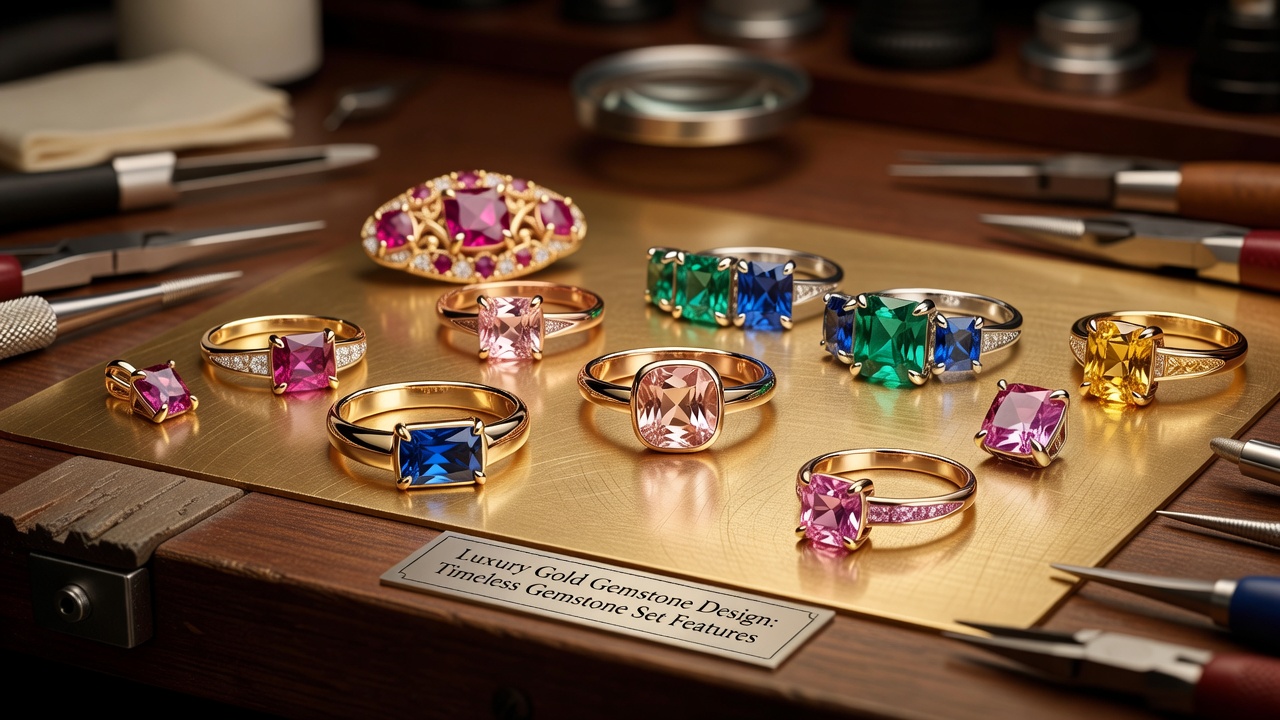
A single carat of well-cut sapphire loses half its visual weight when mounted in a poorly proportioned setting. This is the uncomfortable truth that separates fine jewelry from costume pieces: the stone matters, but the metalwork around it decides whether that stone ever gets to shine. Gold, in particular, behaves like a stage rather than a spotlight - it either elevates a gem's color and fire or quietly smothers them.
Anyone who has compared two rings set with visually similar stones has felt this difference without being able to name it. One piece looks alive, almost lit from within. The other looks flat, disconnected, like the stone was dropped into a hole rather than built into a design. The gap between these two outcomes is craftsmanship - specifically, the discipline of gold gemstone inlay work, where metal is shaped, tensioned, and polished around a gem with the precision usually associated with engineering rather than decoration. For readers curious about how these design principles show up outside traditional jewelry counters, some visual references worth exploring appear at gemstones gold features, where gold-and-stone combinations are rendered as decorative motifs rather than wearable pieces, offering a different angle on the same aesthetic logic.
This article looks at what actually makes gold-and-gemstone design work - technically, visually, and historically - and why the best examples of it age well instead of aging out.
What Makes Gold the Preferred Metal for Gemstone Settings
Gold has held its position at the top of fine jewelry for reasons that go beyond tradition or status. Its physical properties make it uniquely cooperative with gemstones, and its color chemistry interacts with colored stones in ways that other metals cannot replicate.
Malleability and Precision Shaping
Pure gold is soft enough to be worked into extremely fine details - prongs, bezels, filigree - without cracking under the stress of shaping. Alloyed gold, used in most fine jewelry at 18k or 14k, keeps enough of that malleability while gaining the hardness needed for daily wear. This balance lets a jeweler create settings that hug a stone's exact contours rather than approximating them, which is the technical foundation of any convincing gold gemstone inlay.
Color Interaction With Different Gemstones
Yellow gold warms rubies and citrines, intensifying their red-orange spectrum. White gold and platinum-toned alloys tend to suit blue and green stones, since the cooler metal tone doesn't compete with the stone's hue. Rose gold, with its copper content, has become a favored partner for morganite and pink sapphire precisely because the metal and stone sit on the same color family. Choosing the right gold tone for a given gemstone is not a stylistic afterthought - it is a core decision in gemstone gold features design.
Durability for Long-Term Wear
Gold resists corrosion and tarnish far better than silver or base metals, which matters enormously for pieces meant to be worn daily across decades. A ring set with a fragile stone like opal or emerald needs a metal setting that won't degrade and loosen its grip over time. Gold's chemical stability protects the investment on both sides of the piece - metal and stone alike.
The Art and Technique of Gold Gemstone Inlay
Inlay work is where gold stops being a container for a gemstone and becomes a partner to it. Done correctly, the metal appears to grow around the stone rather than hold it captive.
Traditional Inlay Methods
Classic inlay techniques include channel setting, where stones sit flush within a groove cut into the gold band, and bezel setting, where a thin rim of metal wraps entirely around the stone's girdle. Both methods trace back centuries and remain in use because they protect the stone's edges from chipping while creating a clean, uninterrupted line of metal. Older Mughal and Byzantine jewelry relied heavily on these approaches, embedding gemstones directly into gold surfaces with almost no visible prongs.
Modern Precision Tools and Methods
Contemporary workshops now combine hand-finishing with laser cutting and CAD-modeled wax casting, allowing a setting to be designed around a stone's exact measurements before a single tool touches the gold. This reduces the margin of error that once made inlay work slow and inconsistent. The result is tighter tolerances, less visible metal, and settings that hold stones more securely with less material - a genuine improvement over purely manual methods.
Common Mistakes That Reduce Stone Brilliance
Poor inlay work often comes down to a few recurring errors: settings cut too deep, which blocks light from entering the pavilion of the stone; prongs positioned unevenly, which throws off the stone's apparent symmetry; and metal polished after the stone is set, which risks scratching the gem's surface. Each of these mistakes is avoidable with proper technique, but they remain common in mass-produced pieces where speed is prioritized over precision.
- Over-deep bezels that trap light and dull color
- Uneven prong height that misaligns the stone's table
- Insufficient metal thickness leading to premature wear
- Poor alignment between stone facets and setting angles
Defining Luxury Gold Gemstone Design
Luxury in this context is not a marketing label - it describes a specific set of design decisions that prioritize longevity, proportion, and material honesty over trend-following.
Balance Between Metal Weight and Stone Size
A well-designed piece never lets the gold overwhelm the stone or vice versa. Oversized settings on small stones look clumsy; delicate settings on large stones risk instability. Luxury gold gemstone design treats this ratio as a mathematical problem as much as an aesthetic one, calculating how much metal is structurally necessary before deciding how much is visually desirable.
Custom Versus Mass-Produced Craftsmanship
Custom pieces are built around a specific stone's dimensions, inclusions, and color zoning. Mass-produced settings, by contrast, are built to standard sizes and then fitted with whatever stone comes close enough. This difference explains why two rings with similar carat weights can look entirely different in quality - one was designed for its stone, the other was adapted to it.
Symbolism and Heritage in High-End Pieces
Many luxury design houses draw on historical motifs - Art Deco geometry, Victorian floral inlay, Renaissance cluster settings - reinterpreting them with modern metallurgy. This connects contemporary gemstone set in gold pieces to a longer design lineage, giving them a sense of permanence that purely modern designs sometimes lack.
How Expert Craftsmanship Elevates a Gemstone Set in Gold
Skill shows up in details that most buyers never consciously register but instinctively notice: an even reflection across every facet, a setting that disappears into the design rather than distracting from it.
The Role of the Master Jeweler
A master jeweler brings years of tactile experience to decisions that cannot be fully automated - judging how a specific stone will behave under different lighting, anticipating how gold will move during setting, correcting for a stone's minor asymmetries by hand. This expertise is the difference between a technically correct setting and one that looks intentional.
Hand-Finishing Versus Machine Production
Machine casting handles repetitive structural work efficiently, but final finishing - polishing edges, adjusting prong tension, correcting microscopic misalignments - still benefits from human hands. High-end workshops typically use machines for the rough form and reserve hand-finishing for everything that affects how light interacts with the piece.
Quality Control in Luxury Workshops
Reputable workshops inspect each piece under magnification before it leaves production, checking for loose prongs, uneven metal thickness, and stone alignment. This stage catches the kind of flaws that are invisible to the naked eye but become obvious after months of wear. Gold and gemstones craftsmanship at this level treats quality control as inseparable from the design process itself, not a final formality.
Choosing and Caring for Gold Gemstone Jewelry
Owning a piece with strong gemstone gold features is only half the equation - proper care determines whether that quality remains visible for decades or fades within a few years of careless handling.
How to Evaluate Craftsmanship Before Buying
Look closely at how the metal meets the stone. Gaps, visible glue, or uneven prong spacing indicate rushed work. Turn the piece under different light sources and check whether the stone's color stays consistent - a well-matched gold tone should enhance the gem's hue rather than washing it out.
Maintenance Practices That Preserve Brilliance
Regular cleaning with mild soap and a soft brush prevents oil and debris from dulling both metal and stone. Annual inspections by a jeweler catch loosening prongs before a stone falls out. Storing pieces separately, away from harder gems and metals, prevents surface scratches that dull gold's natural shine over time.
Signs of Deterioration to Watch For
A stone that wobbles slightly when touched, metal that shows thinning at the prong tips, or a noticeable change in how light reflects off the setting are all early warning signs. Addressing these early is far cheaper than replacing a lost stone or repairing a cracked band later.
Frequently Asked Questions
What gold karat is best for setting gemstones?
18k gold is generally considered the strongest balance between durability and workability for fine gemstone settings. Softer 22k or 24k gold looks richer but bends too easily for daily wear, while 14k offers more durability at the cost of some color depth.
Does the type of gold affect how a gemstone looks?
Yes, significantly. Yellow gold intensifies warm-toned stones, white gold neutralizes the metal's influence on cool-toned stones, and rose gold complements pink and peach hues. Choosing the wrong gold tone can make even a high-quality stone look muted or mismatched.
How can I tell if a setting was hand-finished?
Hand-finished pieces typically show slight, deliberate irregularities in polish lines and prong shaping that machine-only pieces lack. Under magnification, hand work often reveals subtle tool marks that indicate careful, individualized attention rather than uniform automated output.
Why do some gemstone settings loosen over time?
Prongs and bezels experience metal fatigue from repeated impact, temperature changes, and daily friction. Thinner metal or poorly calculated tension during the original setting process accelerates this loosening, which is why periodic professional inspection matters.
Is a bezel setting better than prong setting for protecting stones?
Bezel settings offer more protection since metal surrounds the stone's edges completely, reducing chipping risk. Prong settings expose more of the stone to light and generally produce more brilliance, but they leave the girdle more vulnerable to impact.
Can antique gold gemstone jewelry be restored without losing its character?
Skilled restorers can reinforce weakened settings and re-polish worn gold while preserving original design details, engraving, and stone placement. The key is working with a jeweler experienced in period-appropriate techniques rather than applying modern shortcuts that erase historical craftsmanship.