
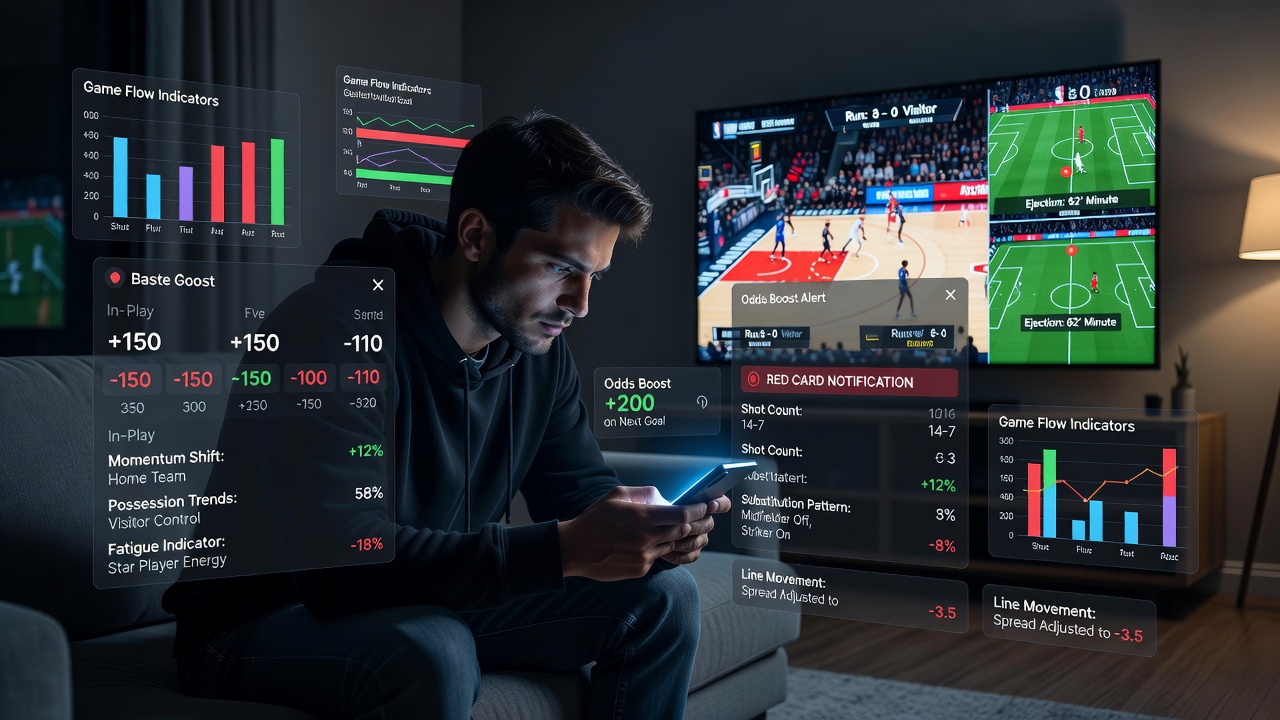
A basketball game can shift its entire complexion in ninety seconds. A soccer match can turn on a single red card. Bettors who wait until kickoff to place their wagers and then walk away are leaving money on the table, because the real opportunities in live sports betting often appear after the first whistle, not before it. The gap between a casual bettor and a consistently profitable one usually comes down to what happens during the event itself, not the pre-game research.
In-play betting has changed the rhythm of how people engage with sports. Odds no longer sit static for hours; they move with every possession, every substitution, every momentum swing. Anyone using a live betting app knows that a line can flip within seconds after a key play, and reacting to that shift faster than the market adjusts is where real edges are found. This is not about luck. It is about understanding how odds behave, how mobile platforms deliver information, and how to structure your attention so you catch the right moment instead of the wrong one.
This piece breaks down the mechanics behind winning more consistently in live markets: how in-play strategies differ from pre-match ones, how real-time odds updates actually work behind the scenes, and how betting app notifications can turn a distracted viewer into a disciplined bettor. None of this requires prediction magic. It requires structure, timing, and a clear read of what the data in front of you is actually saying.
Understanding Live Sports Betting and Why It's Different
What Separates In-Play Betting from Pre-Match Wagering
Pre-match betting relies on static information: team form, injury reports, historical head-to-head records. Once the event starts, all of that becomes background context rather than the primary input. In-play betting shifts the decision-making process toward what is happening on the field right now - possession trends, scoring pace, fatigue, tactical adjustments. The bettor is no longer predicting an outcome from a fixed starting point; they are reacting to a live, evolving situation.
Why Odds Move Faster During Live Events
Sportsbooks price live markets using algorithms that recalculate probability continuously, factoring in score, time remaining, and recent event data such as shots on target or turnovers. Because the underlying variables change constantly, the odds have to change with them. This is fundamentally different from pre-match pricing, which updates gradually over days based on news and betting volume.
The Psychological Shift Required for Live Betting
Watching a game while betting on it demands a different mental posture than researching a game days in advance. There's less time to deliberate, more temptation to chase a bad beat, and higher exposure to emotional decisions. Bettors who succeed at in-play betting treat it as a discipline exercise as much as an analytical one.
- Pre-match betting is research-driven; in-play betting is observation-driven.
- Live odds refresh in seconds; pre-match odds refresh over hours or days.
- In-play requires faster decisions with less margin for hesitation.
Core In-Play Strategies That Actually Work
Momentum-Based Betting
Momentum is measurable, not just a broadcaster's talking point. A team that has won three consecutive possessions, or a tennis player who has broken serve and holds a comfortable lead, tends to carry that advantage forward in the short term. Betting into visible momentum - rather than against it - is a foundational in-play approach, particularly in the minutes immediately following a shift in control.
Betting Against Overreactions
Markets overcorrect. A single early goal in soccer can cause odds to swing more dramatically than the statistical impact of that goal actually warrants, especially with over 70 minutes left to play. Recognizing when the market has overreacted to a recent event, and betting the other side before it corrects itself, is one of the more reliable in-play tactics available to attentive bettors.
Using Game Flow Indicators
Shot count, possession percentage, pace of play, and substitution patterns all offer clues about where a game is heading before the scoreboard reflects it. A team dominating possession without converting chances is often undervalued in the live market simply because the score hasn't caught up to the underlying performance yet.
Timing Your Entry Points
Not every minute of a match offers equal value. The period right after a goal, a big play, or a momentum shift is when odds are most volatile - and most exploitable. Waiting for these windows, rather than betting reflexively at kickoff, is often the difference between a mediocre return and a strong one.
How Real-Time Odds Updates Actually Work
The Data Feeds Behind Live Pricing
Sportsbooks pull data from official league feeds, tracking systems, and in-stadium sensors to update probabilities almost instantly. This data includes possession changes, shot locations, player substitutions, and scoring plays. The faster and more accurate this feed, the more precisely the odds reflect the true state of the game.
Why Odds Sometimes Lag Behind the Action
Even with sophisticated systems, there's a brief delay between an event happening and the odds adjusting - often just a few seconds, but enough to matter. This lag is where sharp bettors watching the broadcast directly, rather than relying solely on the app's visual feed, can occasionally spot value before it disappears.
Reading Odds Movement as a Signal
A sudden shift in real-time odds updates tells you something the raw score doesn't. If a team's odds shorten dramatically without a corresponding scoring change, it usually means the market has picked up on possession dominance, an injury to a key opposing player, or a tactical change. Learning to read these shifts as information, not just as pricing, sharpens decision-making considerably.
The Role of Your Mobile Betting Platform
What to Look for in a Reliable Platform
Speed and stability matter more in live betting than in any other form of wagering. A mobile betting platform needs to process bets instantly, display updated odds without lag, and handle high traffic during major events without freezing. Anything less turns a potential winning moment into a missed one.
Interface Design and Decision Speed
A cluttered interface costs bettors time they don't have during fast-moving matches. Platforms that surface key stats - score, time, possession, recent events - directly alongside the betting slip allow for quicker, better-informed decisions than those requiring multiple taps to find basic context.
Live Streaming Integration
Many platforms now bundle live video streams directly into the betting interface, letting users watch and wager from the same screen. This closes the gap between observation and action, reducing the delay that used to exist between seeing a play develop and placing a bet on it.
Betting App Notifications: Your Edge in Fast-Moving Markets
Types of Notifications Worth Enabling
Not all alerts carry equal value. Score-change notifications, odds-boost alerts, and line-movement warnings each serve a distinct purpose. Bettors who customize their betting app notifications to highlight only high-impact events - red cards, momentum-shifting scores, significant odds swings - avoid the noise that comes with generic, constant alerts.
Using Alerts to Catch Value Before It Disappears
Odds on live markets can shift within seconds of a major event. A well-configured notification system flags these moments the instant they happen, giving bettors a narrow but real window to act before the price corrects. This is particularly useful for anyone who can't watch every minute of every match they're interested in.
Avoiding Notification Fatigue
Too many alerts create the opposite problem: desensitization. When every minor event triggers a buzz, bettors start ignoring notifications altogether, including the ones that matter. Curating alerts around specific triggers - rather than accepting default settings - keeps notifications useful instead of exhausting.
Bankroll and Risk Management for Live Betting
Why In-Play Betting Demands Tighter Discipline
The speed of live markets makes it easy to place more bets than intended, often chasing losses within the same match. Setting a fixed stake per bet and a maximum number of live wagers per event before the game starts removes the temptation to improvise under pressure.
Setting Limits Before the Game Starts
Decisions made in the heat of a close match are rarely as sound as decisions made calmly beforehand. Defining a loss limit, a target profit, and a maximum bet size in advance gives structure to what would otherwise be a purely reactive process.
Tracking Results Across Live Sessions
Reviewing which in-play strategies actually produced returns - momentum bets, overreaction fades, timing-based entries - over weeks or months reveals patterns that a single session never will. Bettors who track this data adjust their approach based on evidence rather than gut feeling.
Frequently Asked Questions
Is in-play betting riskier than pre-match betting?
It carries different risks rather than strictly higher ones. The speed of decision-making increases the chance of impulsive bets, but the additional information available during a live event - momentum, pace, injuries - can also produce sharper, better-informed wagers than pre-match guesses.
How fast do real-time odds updates actually change during a match?
Odds can update multiple times per minute during high-action moments, particularly after goals, big plays, or momentum shifts. During quieter stretches, updates may be less frequent, reflecting the steadier state of the game.
Do betting app notifications actually improve results, or are they just convenience features?
When configured around specific, high-impact triggers, notifications genuinely improve results by alerting bettors to value before it disappears. Left on default settings, however, they often become noise that adds little practical benefit.
What's the biggest mistake new live bettors make?
Betting reactively on every score change without a clear strategy. Successful in-play betting relies on waiting for specific conditions - momentum, overreaction, favorable timing - rather than wagering continuously out of excitement.
Can a slow mobile connection actually cost me money in live betting?
Yes. A delayed connection means you're acting on outdated odds or missing the window entirely before a price corrects. A stable connection and a responsive mobile betting platform are practical requirements, not optional conveniences, for in-play betting.
How many live bets should I place during a single match?
There's no universal number, but setting a personal cap before the match starts - for example, two or three well-considered bets rather than a dozen impulsive ones - helps maintain discipline and avoid chasing losses mid-game.